
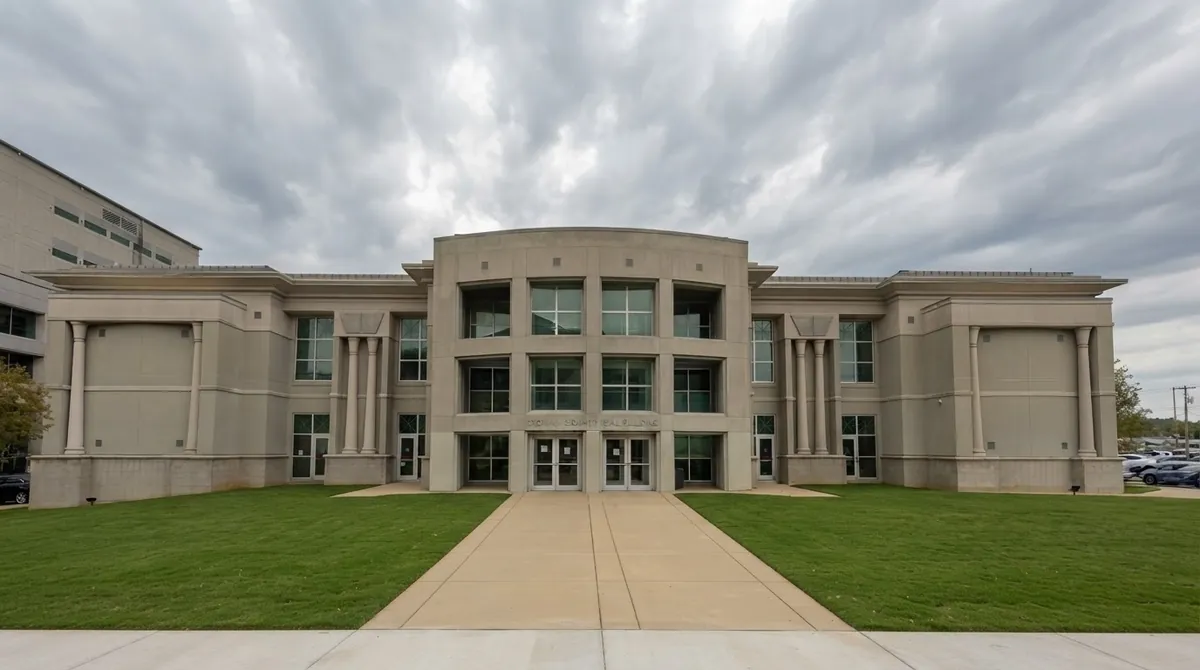
Court records in Etowah County, Alabama are maintained by the Circuit Clerk's office and can be accessed through online tools, official court portals, and in-person visits to the clerk's office. EtowahCourt.us can help you find publicly available court record information for Etowah County. You can also search records through the Etowah County Circuit Court website, the Alabama Administrative Office of Courts portal, and by visiting the Circuit Clerk's Office in person, where a public access computer terminal is available for searching court record information.
Etowah Court System Overview
Etowah County is part of the Sixteenth Judicial Circuit of Alabama. The Sixteenth Circuit serves Etowah County exclusively. The Circuit Clerk functions as the official record keeper and business manager for all court proceedings held in both the Circuit and District Courts of Etowah County. Cassandra Johnson currently serves as Circuit Clerk. The Circuit Court handles felony criminal cases, civil cases above the District Court's jurisdictional limit, domestic relations matters, and appeals from District Court. The District Court handles misdemeanors, civil cases within its jurisdictional threshold, traffic violations, and preliminary hearings. The courthouse is located in Gadsden, the county seat.
Courts Serving Etowah
Several courts serve Etowah County residents at the state and federal levels:
Etowah County Circuit Court (Sixteenth Judicial Circuit)
Etowah County District Court
Gadsden Municipal Court
The City of Gadsden Municipal Court handles municipal ordinance violations and certain misdemeanor offenses occurring within city limits.
U.S. District Court — Northern District of Alabama (Northeastern Division)
Etowah County falls within the Northern District of Alabama. Federal civil, criminal, and bankruptcy matters for Etowah County residents are handled through this court.
Etowah County Probate Court
What Types of Cases Etowah Courts Hear
Courts in Etowah County handle a wide range of case types across criminal, civil, and specialized divisions:
- Criminal: Felonies, misdemeanors, infractions, DUI cases
- Civil: General civil litigation, small claims, landlord-tenant disputes
- Traffic: Moving violations, parking citations, license-related matters
- Family Law: Divorce, custody, child support, paternity, protection orders
- Domestic Relations: Termination of parental rights, adoption
- Probate: Decedent estates, guardianships, conservatorships, wills
- Juvenile: Delinquency proceedings, child protective cases
The sections below explain which court handles each type and how cases proceed through the system.
District Court Cases in Etowah
In Alabama's unified court system, the term "District Court" refers to the lower trial court (not to be confused with the federal district court). Etowah County District Court hears misdemeanor criminal cases, traffic violations, civil actions within its jurisdictional dollar limit, small claims, and preliminary hearings in felony cases. When a felony case establishes probable cause at a preliminary hearing, it is bound over to the Circuit Court for further proceedings. District Court judges also handle DUI arraignments and certain domestic violence matters. Cases are assigned to judges based on the court's internal scheduling procedures, and the District Court operates out of the Etowah County Courthouse in Gadsden.
Magistrate Court Cases in Etowah
Alabama does not operate a separate magistrate court system in the same way some other states do. Instead, District Court judges in Etowah County perform functions that other states assign to magistrate judges, including:
- Issuing arrest and search warrants
- Setting bail and bond
- Conducting preliminary hearings in felony cases
- Hearing misdemeanor and traffic cases
- Small claims cases (up to $6,000 under Alabama law)
- Civil cases within the District Court's jurisdictional limit of $20,000
Small claims in Alabama are governed by the Alabama Small Claims Act, and filing is done through the District Court clerk's office. Traffic violations, including DUI arraignments, are also handled at the District Court level in Etowah County.
Family Law, Probate, and Juvenile Matters in Etowah
Family Law
Divorce, custody, child support, paternity, civil protection orders, and termination of parental rights cases are handled through the Circuit Court's Domestic Relations Division. After a final divorce decree is signed by the judge, parties return to the clerk's office to file the decree and obtain certified copies. The Alabama Department of Public Health also maintains divorce certificates and can issue certified copies for a $15 search fee.
Probate
Decedent estates, guardianships, conservatorships, and will contests are handled by the Etowah County Probate Court, which operates separately from the Circuit and District Courts. The Probate Court is located at the Etowah County Courthouse, 800 Forrest Ave., Gadsden, AL 35901 (phone: 256-549-2350).
Juvenile
Juvenile delinquency and child protective proceedings in Etowah County are heard in the juvenile division of the court system. Juvenile records are confidential under Alabama law and are not available for public inspection. The Alabama Department of Human Resources is involved in child protective cases and foster care matters.
How Cases Move Through the Etowah Court System
- Filing / Initiation: Criminal cases begin with an arrest or the filing of a complaint. Civil cases start when a plaintiff files a complaint with the clerk. Family law matters begin with a petition (e.g., complaint for divorce). Documents can be filed electronically through AlaFile, Alabama's electronic filing system.
- Assignment to Judge: Cases are assigned to a judge based on the court's internal procedures and the type of case filed.
- Initial Hearings: In criminal cases, the defendant is arraigned and enters a plea. In civil cases, the court may schedule an initial conference to set deadlines.
- Pre-Trial Phase: Both sides conduct discovery, file motions, and may negotiate a plea (criminal) or settlement (civil). Pre-trial conferences may be scheduled.
- Trial or Resolution: Cases proceed to trial (bench or jury), or resolve through a guilty plea, settlement agreement, or default judgment.
- Post-Judgment: Criminal cases move to sentencing. Civil cases may involve enforcement of judgments. Either party may file an appeal to the Alabama Court of Civil Appeals or Court of Criminal Appeals, accessible through the Alabama Appellate Courts Public Portal.
Court Administration, Local Rules, and Public Access in Etowah
The Sixteenth Judicial Circuit courts in Etowah County are administered under the direction of the presiding Circuit Judge, with day-to-day operations managed by the Circuit Clerk's office. The Circuit Clerk serves as the official record keeper for all proceedings in both Circuit and District Court.
Local Rules
Local court rules for the Sixteenth Judicial Circuit can be found through the Etowah County Circuit Court website. Attorneys and self-represented parties should review these rules before filing or appearing in court.
Public Access to Records
Most court records in Alabama are generally open to the public, with exceptions for sealed records, juvenile cases, adoption files, and certain mental health proceedings. A public access computer terminal is available inside the Circuit Clerk's Office for searching court record information. You can also submit a records request directly to the clerk's office. Alabama citizens may additionally submit a public records request through the Secretary of State's office for records maintained by state agencies.
Attending Hearings
Court hearings in Etowah County are generally open to the public and held in person at the courthouse. Contact the Circuit Clerk's office at 256-549-2181 to ask about any remote hearing options or specific courtroom procedures.
Court Records and Related Court Resources in Etowah
- Court Record Search: The Alabama Administrative Office of Courts offers the "Just One Look" on-demand public access portal for searching Alabama state trial court records one case at a time.
- Records Request and Copies: Visit the Etowah County records request page for information on requesting copies of court documents, or use the public access terminal at the clerk's office.
- Court Forms: Standardized court forms are available through the Alabama AOC E-Forms portal, including forms for civil, criminal, domestic relations, and other case types.
- Criminal Division Information: The Etowah County criminal division page provides details on the criminal process, court dockets, and how to locate an attorney.
- Appellate Court Records: Dockets for cases on appeal are available through the Alabama Appellate Courts Public Portal. Registered users can view and purchase documents.
- Sex Offender Registry: The Alabama Law Enforcement Agency Sex Offender Registry allows public searches of registered sex offenders in Etowah County and statewide.
- Sheriff's Office: The Etowah County Sheriff's Office handles law enforcement services including criminal investigations and corrections.
- Property Tax and Assessment Records: The Alabama Department of Revenue provides links to Etowah County's online appraisal and assessment records. You can also search tax delinquent properties by county.
- Vital Records: The Etowah County Health Department and the Alabama Department of Public Health handle birth, death, marriage, and divorce certificates.
- Clerk's Office Contact: For any questions about court records, filings, or certified copies, contact the Etowah County Circuit Clerk's Office at 256-549-2181.